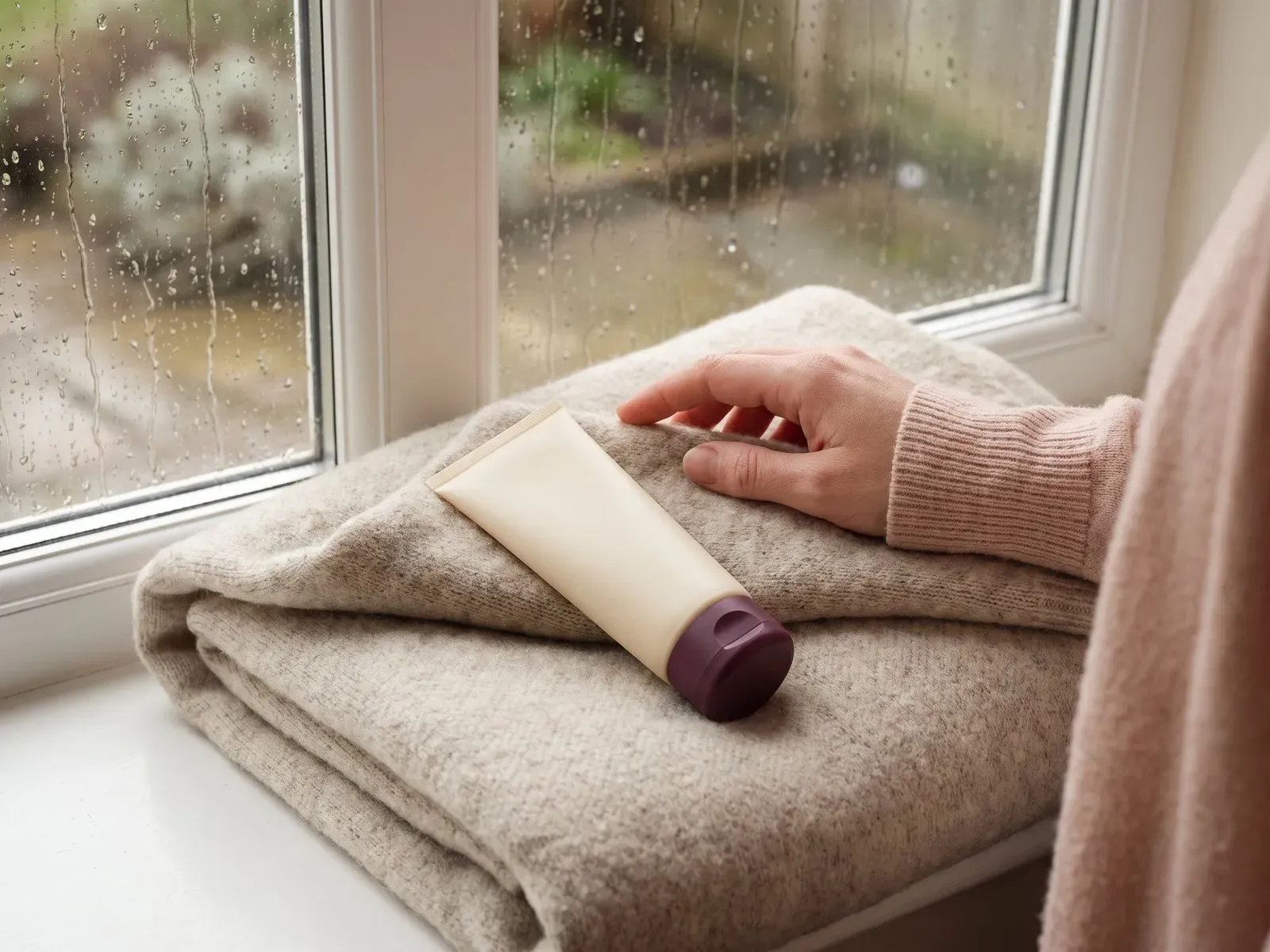
The Manchester sky can look grey for months, so it is tempting to skip SPF between October and March. Please do not. The rays that cause the look of dark spots are the ones you cannot feel.
Cloud does not stop UVA
UVA reaches skin through cloud and through window glass all year round, and it is behind the look of most dark spots. It does not burn the way UVB does, so you will not notice it happening. That is exactly why it pays to make SPF a daily habit rather than a sunny day one. Think of it the way you think of brushing your teeth: small, daily, unglamorous and worth it.
Choosing an SPF that does not sting
For reactive skin we suggest Mineral Shield SPF 30, a zinc oxide formula with a sheer tint, or Daily Veil SPF 50, which uses modern filters and leaves no white cast. Both are fragrance free and sit well under make-up. If your eyes are sensitive, keep the tinted mineral one for around them. A tint also helps even the look of tone without any extra step.
How much is enough
Use two finger lengths for your face and neck. Most people use far less than that without realising. Reapply when you are outdoors for a long time, and keep an SPF lip balm in your coat pocket, because lips need protection too. A hat and sunglasses help, but they are no substitute for cream on bare skin.
Creamy formulas tend to feel kinder on reactive skin than thin, alcohol-heavy lotions, because they do not tingle as they dry. If yours stings, it is usually a filter that does not suit you, so try the other one for a week.
Making it a habit
The simplest trick is to keep your SPF by the toothbrush. If it is there when you brush, it goes on. If it is in a drawer, it does not. A small, fixed place turns a good intention into a habit within a week or two. Before long you will reach for it without thinking, even on a grey morning. If you are not sure which formula suits you, ask us at a free consultation or reply to hello@mallowskin.co.uk.